WHEREABOUTS
Whereabouts
What are testing pools and why are whereabouts important for clean sport?
Out-of-competition testing with no-advance notice is one of the most powerful means of deterrence and detection of doping. To support this type of testing, IPSC has created testing pools as part of its testing program.
Note: IPSC does not currently maintain a Registered Testing Pool (RTP). Athletes are not required to submit whereabouts in ADAMS unless they are formally notified by IPSC or their NADO.
Certain athletes in IPSC testing pools, such as those in the Registered Testing Pool (RTP), are required to provide information on their whereabouts in ADAMS, WADA’s online anti-doping administration and management system.
How do athletes know they need to provide whereabouts?
Athletes who need to provide whereabouts in ADAMS are notified by IPSC of their inclusion in a testing pool as well as what information exactly is required of them, how to use ADAMS, deadlines to submit this information and any consequences if the information required is not submitted.
What do RTP/TP athletes need to know?
Should athletes have any query on ADAMS, such as how to submit whereabouts, please refer to the ADAMS Help Center or contact [email protected]
Tips for RTP/TP athletes
- Set a calendar reminder of the key dates/deadlines to submit quarterly whereabouts information
- For RTP athletes only: Set an alarm for the start of the 60-minute time slot
- Be as specific as possible when submitting your whereabouts information
- Make modifications to your whereabouts information when changes occur
- If you have any doubts, please use the ADAMS Help Centre if you require technical support with ADAMS
- Download the app Athlete Central in order to facilitate all the processes related to the whereabouts system
- Check the WADA Q&A Whereabouts
- Check the At-a-Glance: Athlete Whereabouts
What should athletes do if they wish to retire or return to competition after retiring?
All IPSC athletes in good standing with their Regions who decide to retire from competition must inform IPSC.
For RTP athletes, as soon as the retirement is officially confirmed to IPSC, the athlete will be withdrawn from the IPSC’s RTP with immediate effect. If an athlete wishes to resume competing, they will not be able to do so until they have given IPSC written notice of their intent to resume competition (i.e. by completing and sending a Return to Competition Form) and made themselves available for testing for a period of six months. Please consult Article 5.6 of IPSC Anti-Doping Rules.



Your content goes here. Edit or remove this text inline or in the module Content settings. You can also style every aspect of this content in the module Design settings and even apply custom CSS to this text in the module Advanced settings.
Invitation to ITA December Webinar: “The Athlete Support Personnel – Athlete Relationship in Clean Sport”
Dear AIMS Members, As a part of AIMS collaboration with the International Testing Agency (ITA) we are delighted to inform you about the ITA's monthly webinars, which serve as an invaluable resource to enhance knowledge and promote best practices...
New ADEL Resources from AIMS and WADA
AIMS President message: Empowering the Next Generation with WADA’s Youth Anti-Doping Education InitiativeDear AIMS Members,We are thrilled to announce a powerful new initiative from the World Anti-Doping Agency (WADA), aimed at educating young athletes on the...

WADA releases new e-learning course and downloadable resources targeting youth athletes
Montreal, 1 November 2024The World Anti-Doping Agency (WADA) is pleased to announce two new additions to its Anti-Doping Education and Learning (ADEL) platform designed to enable Anti-Doping Organizations (ADOs) to educate youth athletes on the importance...
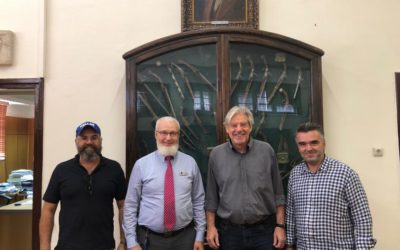
Mr. Ioannis Kelaidakis from Greece appointed as IPSC Scientific Research Director.
Mr. Ioannis Kelaidakis from Greece appointed as IPSC Scientific Research Director. The discipline of Practical Shooting has experienced great growth in recent years and more top athletes raise to the podium in every competition. To explore and study new...
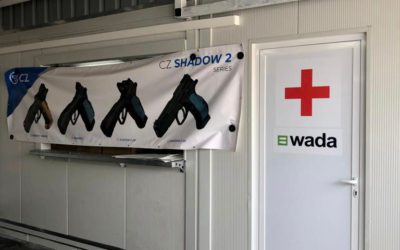
WADA Anti-Doping Testing Successfully Conducted at the 2023 EHC
WADA Anti-Doping Testing Successfully Conducted at the 2023 European Handgun Championship During the IPSC European Handgun Championship 2023 in Corinth, Greece, all athletes who took part in the Anti-Doping testing successfully passed the test. Testing performed - by...
WADA launches new e-learning course for Talented Level Athletes competing at a Major Event
Montreal, 29 August 2023 The World Anti-Doping Agency (WADA) is pleased to announce the launch of a new interactive education course, ‘Talented Level Athletes competing at a Major Event,’ on its Anti-Doping Education and Learning Platform (ADEL). The course, which is...
Invitation to ITA December Webinar: “The Athlete Support Personnel – Athlete Relationship in Clean Sport”
Dear AIMS Members, As a part of AIMS collaboration with the International Testing Agency (ITA) we are delighted to inform you about the ITA's monthly webinars, which serve as an invaluable resource to enhance knowledge and promote best practices...
New ADEL Resources from AIMS and WADA
AIMS President message: Empowering the Next Generation with WADA’s Youth Anti-Doping Education InitiativeDear AIMS Members,We are thrilled to announce a powerful new initiative from the World Anti-Doping Agency (WADA), aimed at educating young athletes on the...
WADA releases new e-learning course and downloadable resources targeting youth athletes
Montreal, 1 November 2024The World Anti-Doping Agency (WADA) is pleased to announce two new additions to its Anti-Doping Education and Learning (ADEL) platform designed to enable Anti-Doping Organizations (ADOs) to educate youth athletes on the importance...
Mr. Ioannis Kelaidakis from Greece appointed as IPSC Scientific Research Director.
Mr. Ioannis Kelaidakis from Greece appointed as IPSC Scientific Research Director. The discipline of Practical Shooting has experienced great growth in recent years and more top athletes raise to the podium in every competition. To explore and study new...
WADA Anti-Doping Testing Successfully Conducted at the 2023 EHC
WADA Anti-Doping Testing Successfully Conducted at the 2023 European Handgun Championship During the IPSC European Handgun Championship 2023 in Corinth, Greece, all athletes who took part in the Anti-Doping testing successfully passed the test. Testing performed - by...
WADA launches new e-learning course for Talented Level Athletes competing at a Major Event
Montreal, 29 August 2023 The World Anti-Doping Agency (WADA) is pleased to announce the launch of a new interactive education course, ‘Talented Level Athletes competing at a Major Event,’ on its Anti-Doping Education and Learning Platform (ADEL). The course, which is...