TESTING
Why Do We Test?
As WADA Code Signatory, we have a committment to keep Practical Shooting clean.
As in International Federation, IPSC must maintain strict compliance with WADA regulations.
Who’s in Charge of Testing?
IPSC has delegated the management of its clean sport activities to the International Testing Agency (ITA), an independent organisation that manages anti-doping programs on behalf of International Federations and Major Event Organisers.
WADA, IPSC, the ITA and the National Anti-Doping Organisations (NADOs) coordinate all anti-doping efforts within the sport of practical shooting.
Who Gets Tested?
Athletes competing at any Level IV match (Continental) and Level V match (World Shoot) are subject to testing based on the following criteria:
-
-
- Overall Winners of any of the Divisions competing
- Competitors selected at random, regardless of their final results
-


Testing Procedures – Urine, Blood and the ABP
Introduction to Doping Control
Testing is one of the essential tools used to protect clean sport by detecting and deterring doping. Testing is a crucial part of the doping control process which protects athletes who we support to feel confident, proud and knowledgeable about their contributions to clean sport when tested.
Athletes can be tested by a National Anti-Doping Organisation (NADO), a National Olympic Committee (NOC), a Regional Anti-Doping Organisation (RADO), the International Practical Shooting Confederation (IPSC), a Major Event Organiser (MEO) or the World Anti-Doping Agency (WADA). These organisations can delegate testing to a third party, such as the ITA.
What to expect during the Doping Control Process
The doping control process is clearly defined by the World Anti-Doping Agency. This means that no matter where and when an athlete is tested, the process should remain the same.
The key steps of the doping control process are listed out in this Doping Control resource prepared by the International Testing Agency, available in multiple languages.
To learn more about the doping control process, please watch this ITA webinar on urine and blood sample collection.
Requirements of the Registered Testing Pool
The Registered Testing Pool (RTP) is a select group of elite athletes who are subject to regular testing and must provide their whereabouts information so they can be located for no-advance notice testing. Athletes are included in the RTP by the International Practical Shooting Confederation and/or their National Anti-Doping Organisation (NADO).
Inclusion in the RTP is done via the International Practical Shooting Confederation Inclusion Letter – this document contains all the key information, deadlines and athlete’s responsibilities as it relates to athletes’ RTP obligations.
Rights & Responsibilities during Sample Collection
Athletes have a number of rights and responsibilities during sample collection.
Athlete rights during sample collection are to:
- Have a representative accompany them during the process.
- Request an interpreter, if one is available.
- Ask for Chaperone’s/Doping Control Officer’s identification.
- Ask any questions.
- Be clear on the type of sample being collected (urine, blood serum, dried blood spot).
- Request a delay in reporting to the doping control station for a valid reason (e.g., attending a victory ceremony, receiving necessary medical attention, warming down or finishing a training session).
- Request special assistance or modifications to the testing process for injury or impairment.
- Record any comments or concerns on the Doping Control Form.
Athlete responsibilities during sample collection are to:
- Report for testing immediately unless delayed for a valid reason.
- Show valid identification (usually a government-issued ID).
- Remain in direct sight of the Sample Collection Personnel following notification.
- Comply with all doping control requirements.
Athlete Biological Passport (ABP)
The Athlete Biological Passport (ABP) is an individual electronic profile that tracks selected biological markers in an individual athlete’s blood and urine sample over multiple tests. Over time, the ABP can show the effects of doping rather than the presence of a prohibited substance in a sample.
You can learn more about the ABP in the Frequently Asked Questions section on the Athlete Hub’s Testing page.
Your content goes here. Edit or remove this text inline or in the module Content settings. You can also style every aspect of this content in the module Design settings and even apply custom CSS to this text in the module Advanced settings.
Invitation to ITA December Webinar: “The Athlete Support Personnel – Athlete Relationship in Clean Sport”
Dear AIMS Members, As a part of AIMS collaboration with the International Testing Agency (ITA) we are delighted to inform you about the ITA's monthly webinars, which serve as an invaluable resource to enhance knowledge and promote best practices...
New ADEL Resources from AIMS and WADA
AIMS President message: Empowering the Next Generation with WADA’s Youth Anti-Doping Education InitiativeDear AIMS Members,We are thrilled to announce a powerful new initiative from the World Anti-Doping Agency (WADA), aimed at educating young athletes on the...

WADA releases new e-learning course and downloadable resources targeting youth athletes
Montreal, 1 November 2024The World Anti-Doping Agency (WADA) is pleased to announce two new additions to its Anti-Doping Education and Learning (ADEL) platform designed to enable Anti-Doping Organizations (ADOs) to educate youth athletes on the importance...
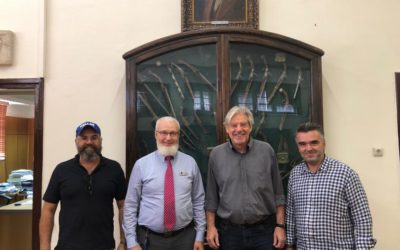
Mr. Ioannis Kelaidakis from Greece appointed as IPSC Scientific Research Director.
Mr. Ioannis Kelaidakis from Greece appointed as IPSC Scientific Research Director. The discipline of Practical Shooting has experienced great growth in recent years and more top athletes raise to the podium in every competition. To explore and study new...
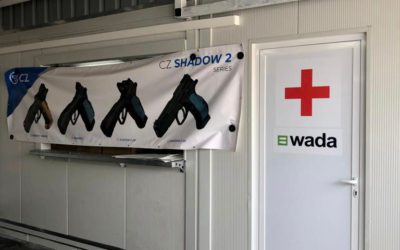
WADA Anti-Doping Testing Successfully Conducted at the 2023 EHC
WADA Anti-Doping Testing Successfully Conducted at the 2023 European Handgun Championship During the IPSC European Handgun Championship 2023 in Corinth, Greece, all athletes who took part in the Anti-Doping testing successfully passed the test. Testing performed - by...
WADA launches new e-learning course for Talented Level Athletes competing at a Major Event
Montreal, 29 August 2023 The World Anti-Doping Agency (WADA) is pleased to announce the launch of a new interactive education course, ‘Talented Level Athletes competing at a Major Event,’ on its Anti-Doping Education and Learning Platform (ADEL). The course, which is...
Invitation to ITA December Webinar: “The Athlete Support Personnel – Athlete Relationship in Clean Sport”
Dear AIMS Members, As a part of AIMS collaboration with the International Testing Agency (ITA) we are delighted to inform you about the ITA's monthly webinars, which serve as an invaluable resource to enhance knowledge and promote best practices...
New ADEL Resources from AIMS and WADA
AIMS President message: Empowering the Next Generation with WADA’s Youth Anti-Doping Education InitiativeDear AIMS Members,We are thrilled to announce a powerful new initiative from the World Anti-Doping Agency (WADA), aimed at educating young athletes on the...
WADA releases new e-learning course and downloadable resources targeting youth athletes
Montreal, 1 November 2024The World Anti-Doping Agency (WADA) is pleased to announce two new additions to its Anti-Doping Education and Learning (ADEL) platform designed to enable Anti-Doping Organizations (ADOs) to educate youth athletes on the importance...
Mr. Ioannis Kelaidakis from Greece appointed as IPSC Scientific Research Director.
Mr. Ioannis Kelaidakis from Greece appointed as IPSC Scientific Research Director. The discipline of Practical Shooting has experienced great growth in recent years and more top athletes raise to the podium in every competition. To explore and study new...
WADA Anti-Doping Testing Successfully Conducted at the 2023 EHC
WADA Anti-Doping Testing Successfully Conducted at the 2023 European Handgun Championship During the IPSC European Handgun Championship 2023 in Corinth, Greece, all athletes who took part in the Anti-Doping testing successfully passed the test. Testing performed - by...
WADA launches new e-learning course for Talented Level Athletes competing at a Major Event
Montreal, 29 August 2023 The World Anti-Doping Agency (WADA) is pleased to announce the launch of a new interactive education course, ‘Talented Level Athletes competing at a Major Event,’ on its Anti-Doping Education and Learning Platform (ADEL). The course, which is...